
Miner Tycoon : Big Dynamite
BREW GAMESArcade
3.9455.00 Reviews
- Version
- 2.0.3
- Installs
- 1.00M
- Age Rating
- Teen
Screenshots
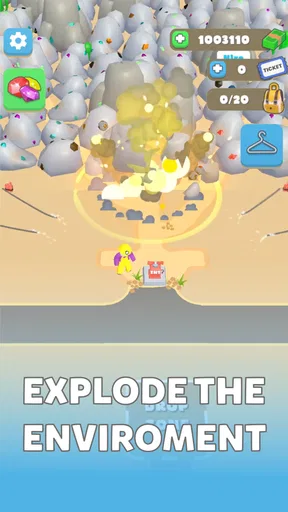
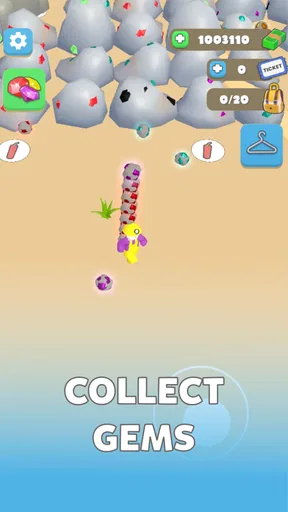
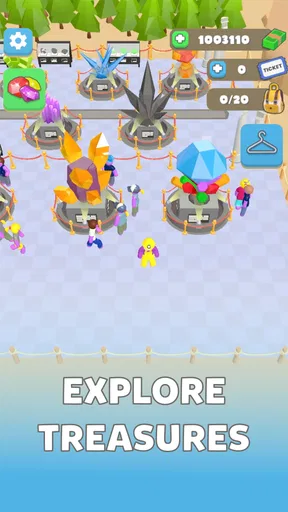
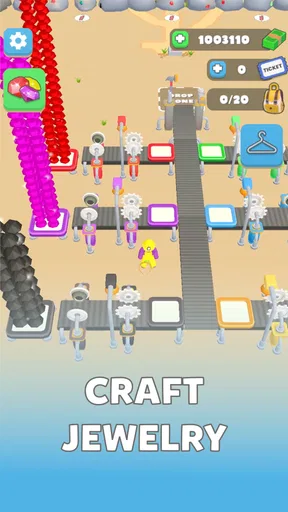
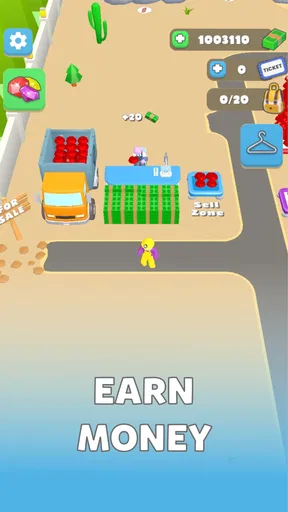
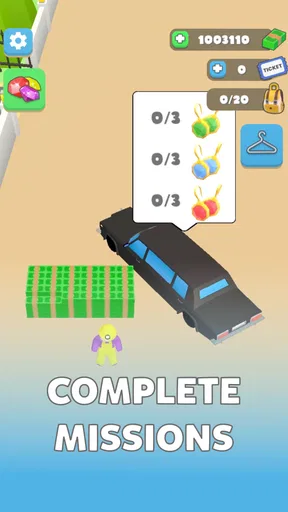
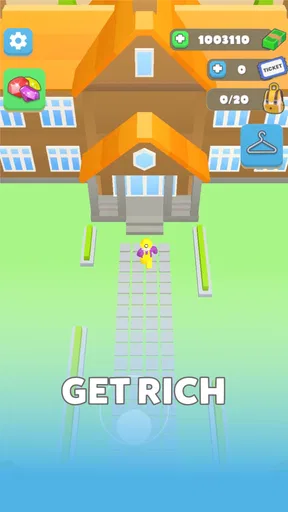
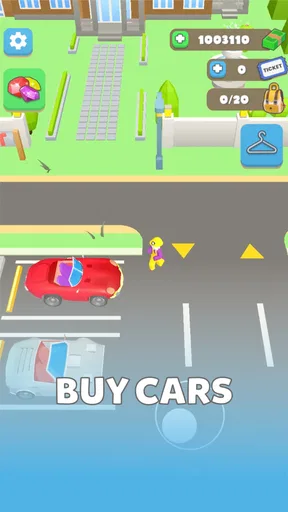
Our Review of Miner Tycoon : Big Dynamite
 Analysis by Appyee
I went into Miner Tycoon: Big Dynamite expecting a quick arcade distraction, and that is exactly where it makes its strongest first impression. The basic fantasy is easy to understand: break into the ground, gather valuable material, sell it, and use the money to keep the operation moving. BREW GAMES keeps the central loop readable enough that I never needed a long tutorial to understand what I was meant to do.
That simplicity is important because the game is built for short sessions. I can open it when I have a few spare minutes, make some progress, and leave without needing to remember a complicated story or a large set of controls. It is free to start, listed for Teen players, and sits firmly in the arcade side of mobile gaming rather than trying to be a full management simulation. The store summary describes the idea in a few energetic words, but playing it makes the appeal clearer: the satisfaction comes from turning a small action into a larger pile of money.
My first-week reaction was positive, although not because the game is unusually deep. It works because the early loop is direct. I do something active, collect a reward, sell what I have gathered, and feel the operation become more capable. That rhythm gives each short visit a visible purpose. For someone who enjoys incremental progress but does not want to study spreadsheets or complicated menus, this is a comfortable entry point.
Why the first week feels so approachable
The opening stretch benefits from a clear sense of momentum. Arcade games often lose me when the first minutes are either too empty or overloaded with instructions. Here, the mining-and-selling idea gives me an immediate target. I do not have to invent my own reason to continue; the next improvement is usually enough motivation.
The explosion theme also helps the game avoid feeling like a completely passive idle title. The idea of using dynamite gives the activity a little more personality than simply watching numbers rise. Even when the underlying goal is straightforward, the presentation encourages me to think in terms of a small mining business rather than a plain counter ticking upward.
A useful way to approach the beginning is to treat every action as part of a cycle instead of chasing the biggest possible reward immediately. I found it more satisfying to build a steady rhythm: gather, sell, improve the operation, then repeat. That habit reduces the temptation to spend resources impulsively and makes the early progress feel more deliberate.
The best early strategy is patience between upgrades. When a game gives frequent rewards, it is easy to spend everything as soon as a button becomes available. I prefer to wait long enough to understand what an improvement changes in practice. That small pause matters in a game whose pleasure comes from seeing the whole mining process become smoother, not merely from collecting isolated bonuses.
It is also worth knowing what kind of player will enjoy the first week most. If you like compact arcade loops, visible progression, and the feeling of building wealth from repeated actions, the opening hours are welcoming. If you need a strong narrative, complex character development, or a large variety of gameplay modes, the initial charm may fade much sooner. The game does not try to disguise its narrow focus, and that is both its strength and its limitation.
What makes the loop satisfying
For me, the strongest part is the conversion from effort to improvement. The mined material is not just a collectible with no purpose; selling it gives the session a clear conclusion. That sale creates a useful pause where I can decide whether to continue, reinvest, or simply close the game. This makes it easier to fit into everyday routines than an arcade game that expects one long uninterrupted run.
A realistic use case is a short break while waiting for an appointment or commuting with time to spare. I can play for a few minutes, complete a small cycle, and stop at a natural point. It is less suitable when I want a demanding challenge that requires concentration from beginning to end. Its appeal is controlled repetition, not high-pressure mastery.
The game’s broad popularity also suggests that the concept is easy for many players to pick up: it has passed one million installs and carries a 3.9 average from roughly sixteen thousand ratings. I would not treat those figures as proof that it will suit everyone, but they do match my experience of a game designed to be immediately understandable. The audience is large because the premise does not ask much from a newcomer.
Whether the progress remains interesting after the novelty
After the first enthusiastic sessions, the important question becomes whether the game offers a reason to return beyond the initial pleasure of seeing the mine grow. In my experience, the answer depends heavily on how much I enjoy incremental routines. The basic loop remains pleasant when I want something undemanding, but it does not suddenly transform into a deeper strategy game later.
That distinction is important. I can imagine keeping it installed as a casual companion, opening it during small gaps in the day and checking on progress when I feel like it. I would not make it my main arcade game if I wanted constant surprises or a steadily expanding skill ceiling. Its lasting value comes from convenience and repetition rather than a large supply of new ideas.
The monthly question is therefore not “Does it become completely different?” It is “Do I still enjoy this particular cycle?” Players who like watching a modest operation improve over time may find a comfortable long-term habit here. Players who need frequent changes in objectives may feel that the mining routine has shown them most of what it has to offer once the first-week excitement settles.
I also think the selling step gives the game a useful psychological reset. Gathering can feel like work, while selling provides a small moment of payoff. That alternating pattern is what can keep a simple activity from becoming completely flat. My advice is to play in short visits rather than forcing long sessions. When I stay too long, the repetition becomes more obvious; when I return briefly, the same loop feels lighter.
How it compares with other arcade choices
Compared with a traditional score-chasing arcade game, this one is more relaxed and more focused on accumulation. I am not primarily trying to beat a timer or perfect a difficult sequence. I am building a result over repeated actions. That makes it a better choice for players who prefer progress that survives between sessions.
Compared with a complex tycoon or management game, it is much easier to enter but offers less room for detailed planning. I do not approach it expecting the layered decisions of a business simulator. The simplified design is useful on a phone because I can understand the next step quickly, but it also means that players looking for deep optimization may eventually want something more demanding.
It is also different from a purely idle game because the mining theme gives my sessions a more active identity. Even if the long-term structure encourages returning to collect and improve, the fantasy of detonating and extracting resources makes the experience feel more tactile than simply watching income accumulate. That is a meaningful advantage during the first weeks, though it may not be enough to overcome repetition for every player.
One practical trade-off is attention. A score-based arcade game may reward a focused burst of skill, while this game rewards consistency and timing my visits around progress. If I only have the energy for a few minutes and want a visible payoff, Miner Tycoon fits better. If I want to test reflexes or compete against my own best performance, another arcade option would probably serve me better.
The real maintenance burden of keeping it installed
Maintaining a place for this game on my phone is not difficult in the traditional sense, but it does require a certain kind of attention. The burden is not learning controls or managing a large collection of systems. It is remembering whether I still enjoy checking the same mining routine. Incremental games can remain installed for a long time simply because they are easy to revisit, even after they stop feeling especially rewarding.
I recommend setting a personal reason for opening it. For example, I might use it as a short evening wind-down or as a small activity during waiting time. Without that boundary, the game can become background noise: something I tap automatically without really enjoying. A clear routine turns its simplicity into an advantage instead of letting it become another source of clutter.
The current version is 2.0.3, and the game supports devices running Android 10 or later. That makes checking device compatibility part of the practical decision before installing. On a suitable phone, the main question is not whether it is difficult to operate; it is whether the game’s repeated economy fits my habits.
Its free entry also lowers the risk of trying it. However, the in-app purchase range runs from $1.99 to $199.99 per item, so I would be careful with spending, especially if I am playing in short, impulsive sessions. The free starting point is useful for testing the loop, but I would not assume that every optional purchase improves the experience equally. My own approach would be to play long enough to decide whether the routine is enjoyable without paying before considering any purchase.
This is one of the less obvious trade-offs in a game built around accumulation: faster progress can reduce the pleasure of earning progress. If I remove too much waiting or effort, I may reach the next milestone sooner but have less reason to return afterward. For that reason, I would treat purchases as a convenience decision, not as a requirement for discovering whether the game is fun.
Who should skip it
I would skip this game if I know that repeated collection and reinvestment quickly frustrate me. It is also not my first recommendation for someone who wants a story-led adventure, a competitive leaderboard experience, or a constantly changing arcade challenge. The mining theme is specific, and the game’s appeal depends on accepting that the central activity will remain familiar.
Teen players should also remember that the age classification is not the same as a promise of a particular level of complexity. The game may be suitable for that age group, but its accessible controls and straightforward loop can appeal to older players who want something casual as well. I would still use the platform’s purchase controls carefully, especially on a shared device.
On the other hand, I would recommend giving it a fair trial to anyone who likes tycoon ideas but finds full management games exhausting. It offers a lighter way to enjoy the fantasy of growing a mining operation. It can also work for players who want an arcade game that does not punish them for leaving after a short session.
Where fatigue begins
The main source of fatigue is predictability. The same loop that feels reassuring during the first week can feel narrow once I have stopped discovering the basic rhythm. Mining, selling, and improving are satisfying actions, but their meaning depends on how much progression remains interesting to me. If I am no longer curious about the next improvement, the routine becomes maintenance rather than play.
Another point of friction is the difference between visible progress and meaningful change. Watching totals rise is pleasant, but numerical growth alone does not always create a fresh decision. I found myself asking whether I was actively playing or simply checking a process I had already understood. That is not a fatal flaw for a casual arcade title, but it is the limit I would keep in mind before treating it as a permanent favorite.
The purchase structure can add another layer of fatigue if I feel pushed to speed things up. Because the game is free to download but includes optional items reaching $199.99, I would avoid making progress feel like a race. Playing at a comfortable pace helps preserve the original charm. If the commercial side becomes more noticeable than the mining fantasy, the experience loses some of its relaxed character.
There is also a session-length trap. Short visits suit the design, but long sessions expose the repetition more clearly. I would not recommend grinding for extended periods just to reach the next milestone. A better workflow is to stop after a satisfying sale or upgrade, then return later. This is a small but practical way to protect the game from becoming tiresome.
My most useful adjustment was to separate “checking progress” from “trying to maximize everything.” The first is relaxing; the second can make a simple game feel like a chore. I would choose one modest goal per visit, such as building enough value for a particular improvement, and then leave. That approach keeps the game’s scale manageable and prevents me from turning casual play into unpaid administrative work.
What lasting value actually remains
Once the novelty fades, the game’s lasting value comes from its reliability. I know what kind of experience I will get: a compact arcade loop about extracting value and building upward. That predictability is useful when I want a low-pressure distraction. It is less useful when I am searching for discovery, challenge, or a new system to master.
I can see it staying on my phone if I use it as a small habit rather than a central hobby. A few minutes between tasks, a quick session before bed, or a relaxed break can justify its space. The game does not need to dominate my attention to be worthwhile. In fact, expecting it to become a full-time game is the quickest way to overestimate what it offers.
The developer, BREW GAMES, has chosen a focused concept rather than an overloaded one. I appreciate that clarity, but it means the game’s success depends on my personal tolerance for repetition. The 1M+ install figure and broad rating activity show that the format has found an audience, while the 3.9 average suggests a more mixed response than a universally loved arcade hit. That feels fair to me: the loop is easy to enjoy, but not everyone will want it for the long haul.
My long-term verdict
Miner Tycoon: Big Dynamite earns a place as a casual arcade option, not as a game I would recommend to everyone or play continuously for months without changing my routine. I like its direct mining fantasy, its quick path from action to reward, and the way it lets me make progress in small visits. The free starting point makes it easy to test, and I can understand why it has attracted a substantial mobile audience.
Its lasting weakness is that the same clarity that makes it approachable can also make it predictable. The game is at its best when I accept it as a light, repeatable activity. It is a poor fit when I want deep management, demanding reflex challenges, or a constant stream of new content. I would also keep the in-app purchase range in mind and avoid spending before confirming that the basic loop has genuine staying power for me.
My recommendation is simple: try it during short sessions and judge how you feel after the initial excitement has passed. If collecting, selling, and gradually improving a mining operation still feels satisfying, it can become a pleasant background habit. If you find yourself opening it only to perform routine checks, another arcade game with stronger moment-to-moment challenge will probably be a better use of your time.
For me, it does not quite become an essential long-term game, but it does earn a modest, clearly defined role. Its real strength is dependable short-form progress, not endless variety. That is enough to make it worth trying for casual players, provided they keep their expectations realistic and let the game remain a small diversion rather than another task to manage.
Verdict
Strengths of Miner Tycoon : Big Dynamite
- Simple controls make mining easy to learn from the first launch.
- Idle earnings let progress continue even when you are not actively playing.
- Frequent upgrade choices give a satisfying sense of steady improvement.
- Bright cartoon visuals make the mining theme friendly and accessible.
- Short play sessions fit well into quick breaks during the day.
Limitations of Miner Tycoon : Big Dynamite
- Progress can feel repetitive once the basic mining loop becomes familiar.
- Upgrade costs may rise quickly and slow advancement without regular play.
- The game may encourage watching ads to collect bonuses or speed up progress.
- Limited strategic depth could disappoint players seeking a complex tycoon simulator.
- Battery use may increase during longer sessions with animations and active gameplay.
Similar Picks in This Category
View All
Subway Surfers
SYBO Games4.6

Stickman Party 234 MiniGames
PlayMax Game Studio4.6

Subway Princess Runner
Ivy4.4

Temple Run
Imangi Studios4.2

Zombie Tsunami
Mobigame SAS4.6

Stack Ball - Crash Platforms
CASUAL AZUR GAMES4.5
Frequently Asked Questions
What is Miner Tycoon: Big Dynamite about?
Miner Tycoon: Big Dynamite is an idle mining and management game in which you operate a growing mining business. You collect valuable resources, upgrade equipment, expand production, and unlock new areas as your company develops. The game is designed for short sessions as well as longer play, allowing progress to continue through automated mining while you are away.
Is Miner Tycoon: Big Dynamite free to download and play?
The game can generally be downloaded and played without an upfront purchase, but it may include optional in-app purchases. These purchases can provide additional currency, boosts, or convenience items, although they are not necessarily required to enjoy the main progression. Players should also check the store listing for current information about advertisements, supported devices, and any regional differences.
Does Miner Tycoon: Big Dynamite require an internet connection?
Some parts of Miner Tycoon: Big Dynamite may work without a constant internet connection, particularly basic mining and offline progress features. However, an internet connection can be necessary for advertisements, cloud-related functions, updates, purchases, events, or synchronizing progress. If you plan to play while traveling, it is best to test offline access first and avoid reinstalling the game without a backup.
Are there advertisements or in-app purchases in Miner Tycoon: Big Dynamite?
Like many free-to-play idle management games, Miner Tycoon: Big Dynamite may use advertisements and optional in-app purchases to support development. Ads can sometimes be presented between actions or offered in exchange for rewards such as temporary boosts. Purchases may speed up progress, but careful upgrading and regular play are usually enough to advance without spending money.
Is Miner Tycoon: Big Dynamite suitable for children and casual players?
Miner Tycoon: Big Dynamite is relatively easy to understand because its central gameplay focuses on collecting resources, upgrading machines, and increasing profits. It can suit casual players who enjoy incremental progress and simple management mechanics. Parents should still review the age rating, advertising content, and purchase settings, since availability and monetization features may vary between Android and iOS.
Play our best games!


